STUDIO DI PROGETTAZIONE ARCHITETTONICA SPECIALIZZATO IN RIGENERAZIONE URBANA E TRASFORMAZIONE DI CONTESTI COMPLESSI
STUDIO DI PROGETTAZIONE ARCHITETTONICA SPECIALIZZATO IN RIGENERAZIONE URBANA E TRASFORMAZIONE DI CONTESTI COMPLESSI
DESIGN, CONCEPT, AND STUDIES FOR THE RECLAMATION OF LANDFILLS AND QUARRIES
Functional and landscape rehabilitation of landfills and quarries / Environmental restoration plans / Reuse centers / Infrastructure for the Circular Economy
Architecture dedicated to the care of essential infrastructure
Over the years, Arcoplan has developed an extremely specialized and unique expertise in Italy in the field of Waste Architecture. This design branch focuses on the architecture and territorial planning of waste management facilities, ranging from large-scale territorial projects to urban and peri-urban interventions: landfills, treatment and composting plants, incinerators, collection systems, and material recovery and reuse centers.
Due to their profound environmental and social footprint, these projects demand a multidisciplinary vision that harmonizes technical rigor with architectural excellence and community trust. Designing these places means transforming indispensable infrastructure into elements that are seamlessly integrated into the landscape and the urban fabric.
Arcoplan provides design, consultancy, and research services, with extensive experience in:
• Functional reuse and renaturalization of landfills • Architecture for waste pre-sorting facilities and composting plants • Environmental restoration plans • Rehabilitation of degraded areas (e.g., quarries) • Integration of pneumatic collection systems into urban contexts • Reuse centers and other Circular Economy infrastructure
Environmental impact assessment / Contextual analysis / Territorial surveys / Landscape and greenery design / Functional planning / etc.
A field of sunflowers atop the former landfill
Phytoremediation meadows cultivated with oil-seed species to test in-situ leachate treatment
From greenhouses to cultivated plots, weaving through diverse paths and settings. Designing a landfill expansion with its future reuse at the very core
Landfills: an opportunity for territorial regeneration
Integrating landscape and functional recovery into the design process allows the land to be shaped in harmony with its context and enables the planning of new land uses from the very beginning. Waste can be used as a ‘plastic material’ to mold new morphologies consistent with the intended functional destination. Planning the entire life cycle of the site means turning a regulatory obligation into a high-value project, capable of generating environmental and economic benefits as well as social consensus.
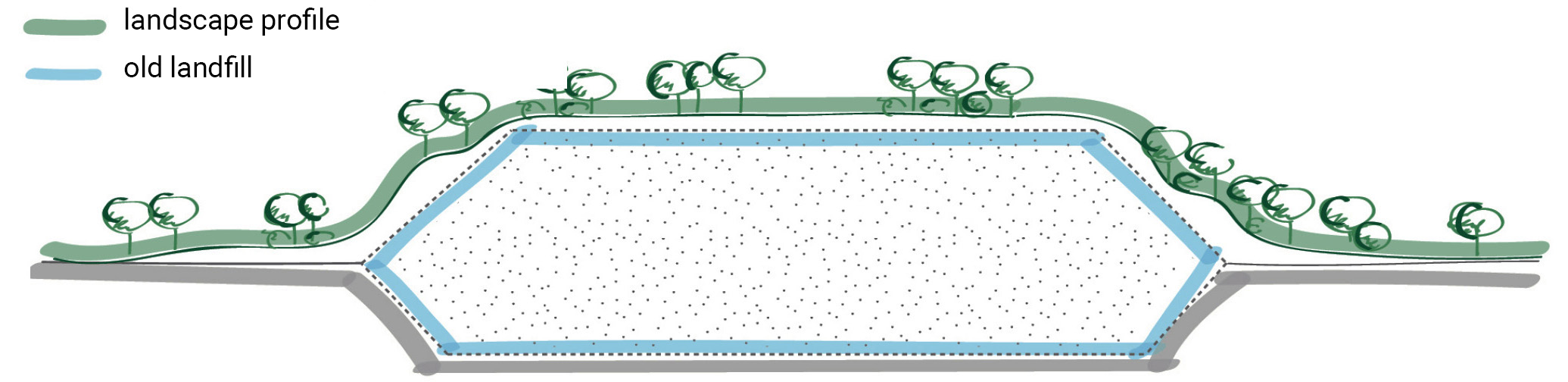
Final capping / Beyond a technical closure: a strategic design phase focused on future land repurposing
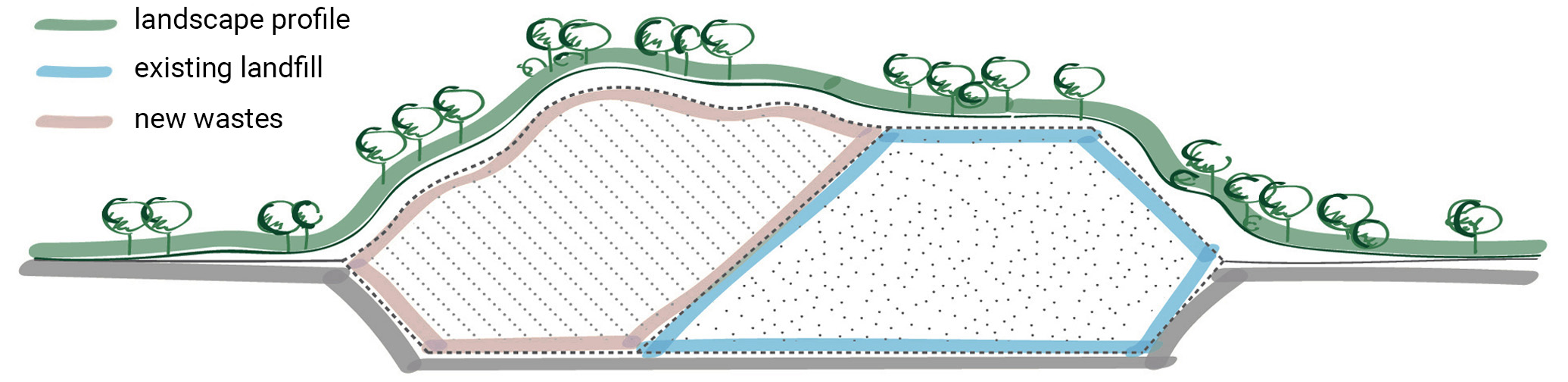
Landfill expansion / Intervention during active landfill operations, utilizing waste to shape the landscape according to the intended future use
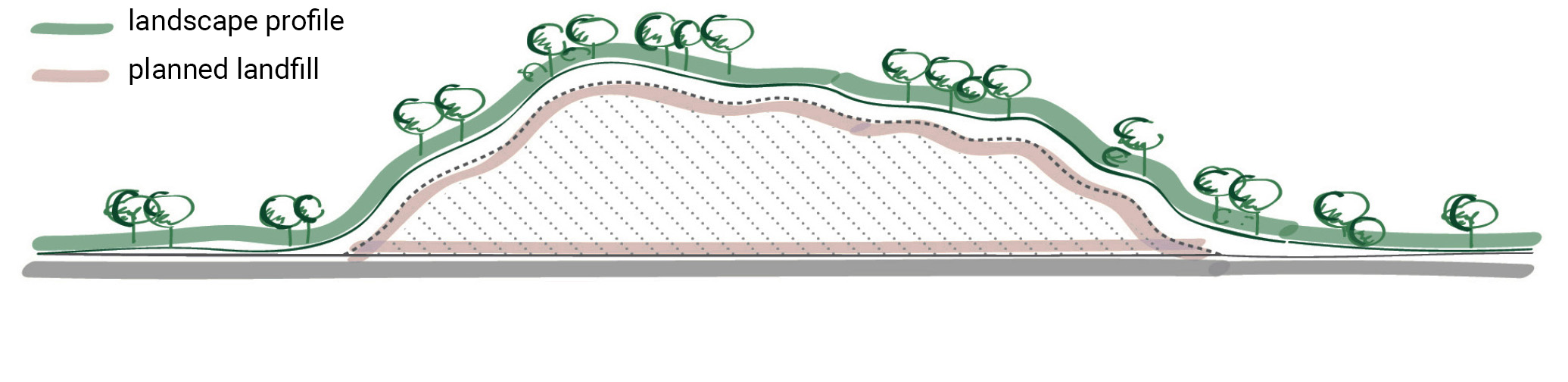
Future-ready design / Waste is utilized from the outset as a land-forming material to shape the landscape for its final destination, rather than just for disposal
Our background
Waste Architecture Platform
We have devoted extensive time to specialized training in this field, conducting in-depth research into leading international benchmarks, organizing design seminars and workshops, and authoring articles and chapters in dedicated monographs. Find out more on Waste Architecture Platform …
Publications
Our team has established extensive scientific expertise in Environmental Architecture, reflected in a wide range of publications across national and international books and journals.
Why are waste management facilities so unattractive?
“Why are waste management facilities so unattractive?” This question sparked our journey of professional and academic growth. We have analyzed numerous international projects, observing how abroad such facilities are designed with the same architectural care as any other public work, at times becoming true landmarks—such as the renowned waste-to-energy plant in Copenhagen. In Italy, however, there is still a prevailing tendency to view these works as sites of decay, unworthy of genuine design investment. Despite the growing conversation around waste recovery and the valorization of waste as a resource, the spaces associated with it continue to be treated as urban fringes to be hidden away. Through the language of Architecture, it is instead possible to enhance the quality of these sites and foster a more conscious perception of facilities that are both necessary and strategic for the future of our cities and landscapes. Read our editorial …